
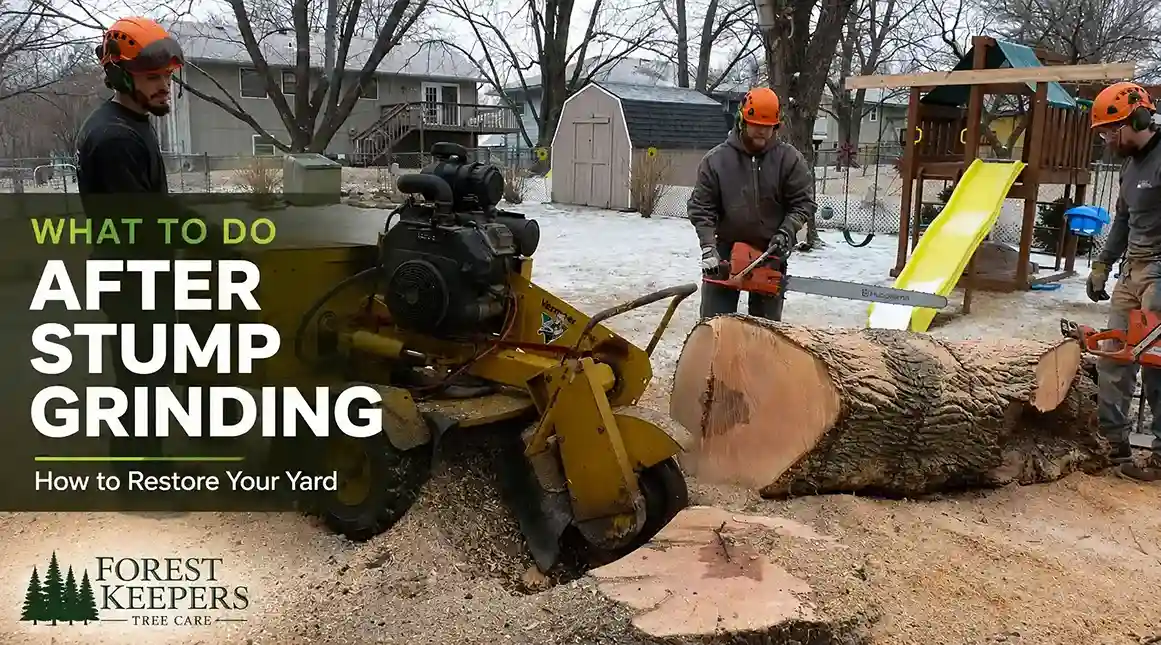
After stump grinding, you are usually left with more than an empty spot in the yard. Wood chips, sawdust, a shallow hole, bare soil, and underground roots can all remain. Knowing what to do after stump grinding helps you prepare the area properly, whether you plan to grow grass, add landscaping, or simply restore the ground.
The next steps are fairly simple. Remove excess grindings, fill and level the hole with suitable soil, and decide how you want to use the space. If stump grinding is part of a larger removal or tree care project, working with a local tree service can help you plan the work and understand what to expect afterward.
What to Do After Stump Grinding
After stump grinding, remove excess wood chips, sawdust, and loose root pieces from the area. Fill the remaining hole with quality topsoil, level it slightly above the surrounding ground to allow for settling, then decide whether you want to grow grass, add landscaping, or use the space for something new.
A clean, well-prepared site gives you a better starting point for whatever comes next. Iowa State University Extension recommends removing woody debris because it can affect soil moisture and reduce the nutrients available to new grass. The area may also settle as material below the surface breaks down.
The basic process is:
- Remove excess stump grindings and sawdust.
- Clear loose wood and root fragments.
- Add quality topsoil to replace the removed material.
- Level the soil, leaving a little room for future settling.
- Choose whether to reseed the lawn, landscape the area, or prepare it for another use.
What Should You Do With Stump Grindings and Wood Chips?
What to do with stump grindings depends on how you plan to use the space. If you want to restore the lawn or plant something in the same area, remove most of the grindings first. If the chips are clean and suitable for reuse, you can save some for mulch elsewhere in the yard.
Should You Remove Wood Chips After Stump Grinding?
Remove excess wood chips and sawdust before adding topsoil for grass or new plants. Large amounts of stump grindings mixed with dirt can interfere with the soil as they break down. Oregon State University Extension explains that wood chips mixed into soil have a greater tendency to tie up nitrogen, especially when the particles are small, such as sawdust.
Can Stump Grindings Be Used as Mulch?
Yes. Clean stump grindings can be useful as surface mulch around established plants or along garden paths. Keep them on top of the soil rather than mixing large amounts into it. Oregon State University Extension recommends surface use because wood chips incorporated into soil are more likely to compete for available nitrogen.
How to Fill the Hole and Repair Your Lawn After Stump Grinding
Repairing the lawn after stump grinding starts with preparing the soil, not with spreading grass seed over the remaining wood chips. Remove excess grindings and larger pieces of wood first, then fill the area with quality topsoil. Level the soil slightly above the surrounding lawn so there is room for some settling over time.
A simple process is:
- Remove excess stump grindings and loose wood.
- Fill the hole with quality topsoil.
- Level the soil slightly above the surrounding grade.
- Prepare the surface for grass seed or sod.
- Water consistently while the new grass establishes.
How Long After Stump Grinding Can You Grow Grass?
You generally do not need to wait for every underground root to decompose before growing grass. Once you remove excess woody debris and create a suitable layer of soil, you can prepare the area for seed or sod.
Good soil contact and steady moisture are important while new grass establishes.
When Is a Good Time to Seed Grass in Lawrence, Kansas?
For cool-season lawns in Lawrence, Kansas, late summer through early fall is generally the strongest seeding window. Kansas State University guidance places the main establishment period from about late August through mid-October, with September often providing favorable conditions for new grass to take root.
Can You Plant a Tree After Stump Grinding?
Yes, you can plant a tree after stump grinding, but planting directly in the exact spot where the old stump stood is often not the best choice. Large roots usually remain underground, and the soil may still contain wood chips and other organic material.
These conditions can make it harder for a new tree to establish. The ground may also continue to settle as remaining roots and wood break down. If the previous tree was removed because of disease, pests, or another site-related problem, consider whether the same issue could affect a replacement tree.
When possible, choose a nearby planting location instead of placing the new tree directly over the old stump area. This gives the new tree better access to suitable soil and reduces interference from old roots.
If you need to reuse the same area, remove as much remaining wood and root material as practical, replace poor soil where needed, and make sure the site can support healthy root growth before planting.
Can a Tree Grow Back After Stump Grinding?
Yes, a tree can sometimes produce new growth after stump grinding. Grinding removes the visible stump and part of the wood below ground, but it does not usually remove the entire root system.
Most roots remain underground, and some tree species can send up new shoots from remaining roots or stump tissue. Whether this happens depends on the species, the condition of the root system, and how much living tissue remains after grinding.
New sprouts do not necessarily mean the original tree is fully growing back. In many cases, they are simply new shoots developing from surviving roots. If sprouts keep appearing, they may need to be removed or managed over time.
Stump grinding and complete root removal are different processes, so some underground growth can remain even after the stump itself is gone.
Common Mistakes to Avoid After Stump Grinding
Most problems after stump grinding come from poor cleanup or preparing the area too quickly. Avoid these common mistakes:
- Leaving too many grindings in place: A thick layer of wood chips can make it harder to establish grass or new plants.
- Filling the hole mostly with wood chips: Use suitable topsoil instead of relying on grindings to fill the space.
- Seeding directly over sawdust: Grass seed needs good contact with soil to establish properly.
- Ignoring future settling: The ground may sink as remaining organic material breaks down, so you may need to add more soil later.
- Planting directly over the old stump site without preparation: Remaining roots and poor soil conditions can make it harder for a new tree to establish.
- Assuming all roots are gone: Stump grinding removes the stump, not the entire underground root system.
Taking a little time to prepare the area properly can prevent uneven ground, weak grass growth, and avoidable rework later.
FAQs
There is no single timeline for root decomposition after stump grinding. It depends on the tree species, root size, soil conditions, moisture, temperature, and how much of the root system remains. Larger roots usually take longer to break down than smaller ones.
No. You do not have to remove every wood chip or small piece of debris. Clean grindings can sometimes be reused as mulch in other parts of the yard. However, remove most excess woody material from areas where you plan to grow grass or new plants, then replace it with suitable soil.
Yes, the ground can settle after stump grinding. Remaining roots and other organic material may continue breaking down below the surface, while recently added soil can also settle over time. If the area becomes low, add more topsoil and level it with the surrounding lawn.
Yes, you can prepare the area for grass once you remove excess wood debris and replace it with suitable topsoil. You do not need to wait for every underground root to decompose. The best time to seed will depend on the grass type and season.
You can remove the wood chips or reuse clean grindings as surface mulch around established plants or garden areas. Avoid mixing large amounts of wood chips or sawdust into soil where you plan to grow grass or new plants.
You can, but planting directly over the old stump location is often less ideal. Remaining roots, wood debris, and settling soil can make establishment more difficult. When possible, choose a nearby planting spot with better soil conditions.
Roots do not continue growing normally once the tree is gone, but some species can produce new shoots from living root tissue. Stump grinding removes the visible stump without removing the entire root system, so occasional sprouting can still occur.
Conclusion
Knowing what to do after stump grinding makes it easier to restore the area and avoid problems later. Remove excess grindings, fill the hole with suitable topsoil, allow for some settling, and then decide whether you want to reseed the lawn, add landscaping, or use the space another way.
For homeowners dealing with stump grinding in Lawrence, local soil conditions, grass type, and the time of year can all affect how quickly the area recovers. If you plan to add a replacement tree, choose a nearby planting spot when practical rather than placing it directly over the old stump location.
