
If a tree falls on your house, the first priority is keeping everyone safe. Move people and pets away from the damaged area, watch for downed power lines, gas odors, fire, or signs of structural movement, and call emergency services if there is an immediate danger. Do not climb onto the roof or start cutting the tree yourself.
Once those hazards are under control, the focus shifts to the tree itself. A tree resting on a roof or structure may require emergency tree removal that accounts for its weight, position, and remaining tension so the removal does not create additional movement or damage.
What to Do If a Tree Falls on Your House: Immediate Steps
If a tree falls on your house, move everyone away from the damaged area and leave the home if it may be unsafe. Call 911 for injuries, fire, downed power lines, a gas smell, or serious structural danger. Once the immediate hazards are controlled, document the damage from a safe location and arrange for the tree to be assessed before removal begins.
- Move people and pets away from the damaged part of the house.
- Leave the building if you notice shifting, cracking, roof movement, or other signs of structural instability.
- Stay well away from downed or sagging power lines and anything touching them.
- Call 911 when there is an immediate threat to people or property.
- Do not climb onto the roof or start cutting branches yourself.
- Take photos only after the area is safe to approach.
The National Weather Service advises staying clear of downed power lines and reporting them. Once these hazards are addressed, the next step is understanding how the tree is resting on the structure and how it can be removed safely.
Who to Call When a Tree Falls on Your House
Who to call when a tree falls on your house depends on the hazard. Start with the issue that creates the greatest immediate risk, then move on to property damage and tree removal.
When Should You Call 911?
Call 911 if someone is injured or trapped, if there is fire or smoke, if power lines are down, if you smell gas, or if the home appears structurally unsafe. A fallen tree by itself does not always require emergency dispatch.
Who Should You Call Once the Immediate Danger Is Controlled?
After the immediate danger is under control, the order usually depends on the damage:
- Contact the utility company if electrical lines or other utilities are involved.
- Contact your insurer to report property damage.
- Contact qualified tree professionals to assess the fallen tree and plan removal.
- Contact roofing or building professionals once the tree is safely removed and the damaged area can be inspected.
How Does a Tree Company Assess a Tree Resting on a House?
Before cutting begins, the tree’s position, weight, remaining support, and contact with the house need to be understood. A fallen tree can still shift, especially if part of the trunk remains attached to the roots or heavy limbs are resting against the roof.
A tree crew will look at where the trunk is supported, which limbs are carrying weight, and whether any sections remain under tension. They also need to see where the tree contacts the roof, walls, or other parts of the structure.
Other factors can affect the removal plan, including:
- Nearby power lines or utilities
- Fences, vehicles, and landscaping
- Access for workers and equipment
- The condition of the remaining root system
- Space available for lowering or moving tree sections
This assessment matters because cutting one limb can change how the rest of the tree moves. Understanding those forces first helps the crew plan a controlled removal instead of creating additional movement.
How Is a Fallen Tree Safely Removed From a House?
A fallen tree on a house is usually removed in stages. The crew cannot treat it like a tree lying in an open yard because the trunk and limbs may still be carrying weight, pressing against the structure, or held under tension.
The exact approach depends on the tree’s size, position, access, and the extent of the damage. In more difficult situations, sections may need to be supported or controlled before cutting begins.
Removal may involve:
- Stabilizing or controlling heavy sections where needed
- Reducing the tree’s weight gradually
- Removing limbs in a planned sequence
- Lowering or moving pieces so they do not swing, roll, or drop onto the house
- Working carefully around roofs, fences, vehicles, and landscaping
- Removing larger trunk sections only after enough weight and tension have been reduced
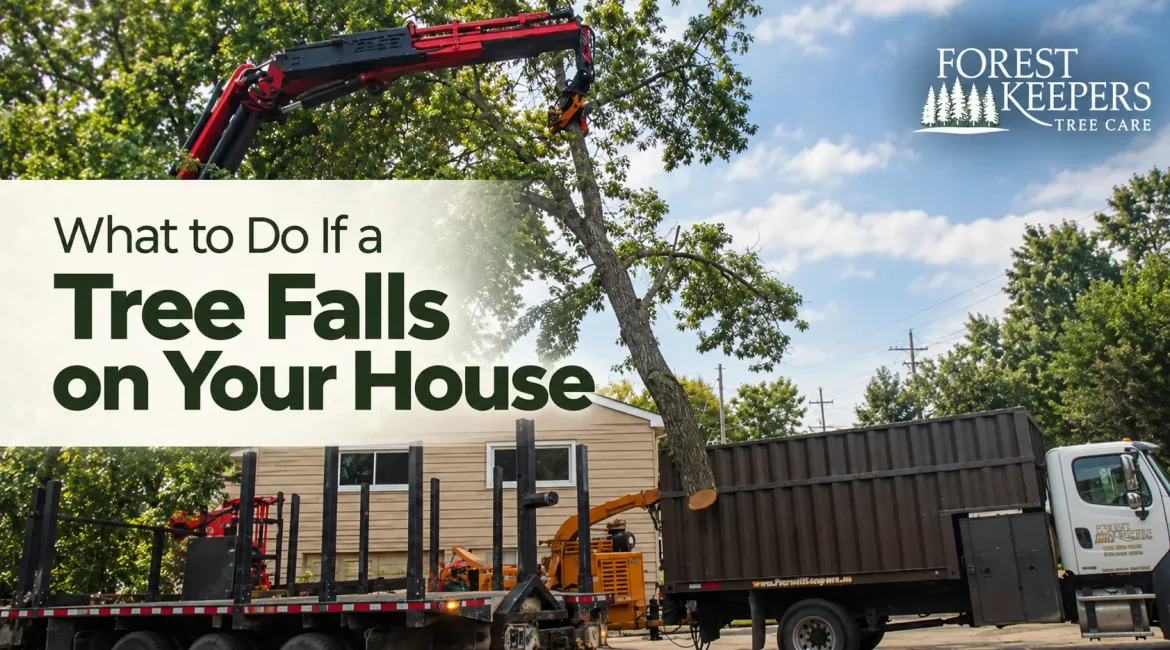
Forest Keepers Tree Care works with technical rigging, crane equipment, hazardous trees, and removals around roofs and power lines. Those methods allow the removal plan to match the actual conditions on the property rather than relying on one approach for every fallen tree.
When Are Rigging or Cranes Needed for Fallen Tree Removal?
Rigging or crane equipment may be needed when a fallen tree cannot be removed safely by simply cutting and lowering sections into open space. The choice depends on how the tree is positioned, what it is resting on, and how much room the crew has to work.
Controlled rigging can help support or redirect limbs and trunk sections before they are cut. A crane may be useful when a heavy section is resting on the house, when nearby structures leave very little drop space, or when holding part of the tree in place gives the crew more control over how it moves.
Not every fallen tree requires this equipment. The purpose is not to make the job more complicated, but to match the removal method to the actual load, access, and obstacles on the property.
What Happens After the Fallen Tree Is Removed?
Once the tree is off the house, the immediate tree hazard is usually resolved, but the property may still need several different kinds of work. Tree debris should be cleared enough for the damaged area to be reached safely, then roofing or building professionals can inspect the structure and determine what repairs are needed.
The remaining stump can be dealt with separately if grinding is appropriate, while lawn or landscaping damage can usually wait until the urgent work is finished. If the same storm affected other trees nearby, it is also worth checking them for broken limbs, new leaning, or root movement.
Tree removal addresses the tree itself. Roof repairs, electrical work, structural repairs, and insurance decisions should be handled by the appropriate professionals once the site is safe to access.
What Should You Document After a Tree Falls on Your House?
Once it is safe to do so, photograph the fallen tree and visible property damage before cleanup changes the scene. Record the date, time, and weather conditions if they are relevant, and keep copies of invoices or receipts for emergency work.
The Kansas Department of Insurance recommends reporting property damage promptly and documenting the loss before permanent repairs begin when possible. When you contact your insurer, ask what documentation they need and whether your policy has separate terms or limits for tree and debris removal.
What If a Neighbor’s Tree Fell on Your House?
Who is responsible can depend on how the tree fell, its condition beforehand, the insurance policies involved, and whether negligence played a role. Start with your own insurer and let them review the circumstances rather than assuming the neighbor is automatically responsible.
How to Reduce the Risk of Another Tree Falling
You cannot prevent every tree failure, especially during severe weather, but certain changes are worth taking seriously. A tree that suddenly leans more than before, develops large cracks, loses major limbs, or shows visible decay may need closer attention.
Root movement can be just as important. Soil lifting around the base, exposed or damaged roots, or a noticeable change after a storm can point to reduced stability. Our guide to the signs of tree root damage explains several of these warning signs in more detail.
After strong wind or saturated ground, compare how nearby trees look and stand. A new lean, hanging limb, or disturbed root zone may be more meaningful than the same feature on a tree that has looked unchanged for years.
FAQs
The same safety rules apply at night. Leave the damaged area if the home may be unsafe, avoid inspecting the roof or tree closely, and stay away from downed wires. Call 911 if there are injuries, fire, a gas smell, electrical hazards, or serious structural damage.
It depends on the damage. If the house shows major roof damage, structural movement, exposed electrical hazards, or a gas smell, leave and wait until the appropriate professionals say it is safe to return.
Sometimes, yes. If the tree creates an immediate hazard or could cause more damage, urgent removal may be necessary. Document the damage first when it is safe, contact your insurer promptly, and keep photos, invoices, and receipts.
The goal is to limit additional movement and damage through a controlled removal plan. However, a tree resting on a damaged structure can shift, so no company can guarantee that existing damage will remain unchanged. The tree’s weight, support points, and contact with the roof need to be assessed first.
Not always. It depends on what remains standing, how much of the tree was damaged, and whether the remaining trunk, roots, and major limbs are still structurally sound. A proper assessment is needed before deciding whether partial cleanup or full removal is appropriate.
Conclusion
If a tree falls on your house, protect people first and address any electrical, gas, fire, or structural hazards before anything else. Do not climb onto the roof or start cutting the tree yourself. Once the area is safe, have the tree assessed so removal can be planned around its weight, position, and contact with the structure.
An emergency tree service in Lawrence can evaluate the fallen tree and determine a controlled removal approach. Document the damage and coordinate repairs once the tree hazard is cleared.
