
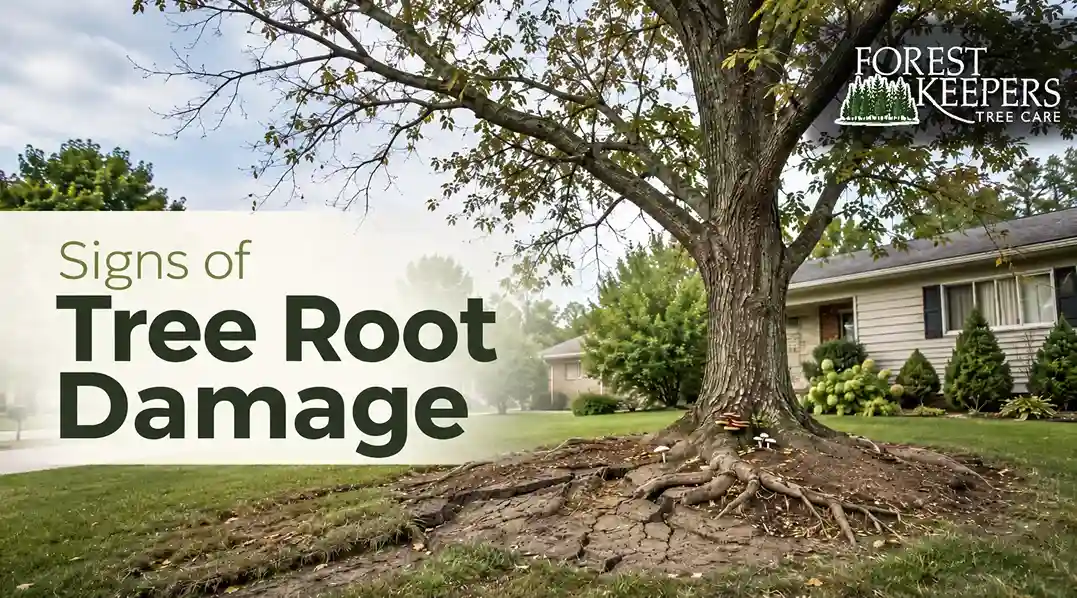
Root damage is not always visible below the soil. The first signs of tree root damage may appear as thinning leaves, branch dieback, mushrooms near the trunk, lifting soil, or a sudden change in the tree’s stability.
One symptom alone does not confirm root damage because drought, insects, disease, and other problems can cause similar tree root damage symptoms. For homeowners seeing several warning signs at once, consulting an arborist in Lawrence KS is a practical next step. This guide covers visible symptoms, common causes, recovery potential, immediate actions, and signs that require urgent assessment.
What Are the Most Common Signs of Tree Root Damage?
The most common signs of tree root damage include sudden leaning, lifting soil, a thinning canopy, branch dieback, pale or undersized leaves, early leaf drop, mushrooms near the trunk, and visibly damaged roots. These symptoms can also come from drought, disease, or insects, so the tree may need a closer assessment.
| Warning Sign | What It May Indicate | Urgency |
|---|---|---|
| Sudden lean and lifted soil | Loss of root support | Urgent |
| Gradual canopy thinning | Long-term root stress | Schedule an assessment |
| Mushrooms at the base | Possible root or trunk decay | Prompt assessment |
| Cut or crushed roots | Construction damage | Depends on the damage |
| Missing root flare | Deep planting or girdling roots | Needs investigation |
Use this table as a screening guide, not a diagnosis.
Changes in the Tree’s Stability
A tree that suddenly leans, shifts at the base, or lifts the surrounding soil may have lost part of its root support. Cracks or mounded soil around the root plate are especially concerning after strong winds or saturated ground.
A long-standing lean may simply reflect how the tree grew. A new or worsening lean requires more attention. The International Society of Arboriculture includes root movement, soil changes, and sudden leaning among common tree-risk warning signs.
Changes in Leaves, Branches, and Growth
Damaged roots may struggle to supply enough water and nutrients to the canopy. Watch for:
- Thinning foliage
- Small or pale leaves
- Wilting or leaf scorch
- Early fall color or leaf drop
- Dead twigs and scattered branch dieback
- Limited annual growth
These tree root damage symptoms may appear across the canopy or mainly on one side. However, drought and vascular diseases can cause similar changes. The University of Minnesota Extension also connects girdling roots with poor leaf color, slow growth, wilting, and canopy decline. If the tree also has bark loss, fungal growth, or widespread deadwood, check the warning signs of a dying tree to determine whether the decline may extend beyond the roots.
Changes Around the Roots and Trunk Base
The root flare is the widened area where the trunk meets the main roots. A trunk that enters the soil like a pole may have been planted too deeply or covered with excess soil or mulch.
Other visible warning signs include:
- Roots circling or pressing against the trunk
- Roots cut during trenching or utility work
- Crushed soil from heavy equipment
- Soft, hollow, discolored, or decaying root tissue
Mushrooms or fungal growth near the base
Mushrooms do not automatically mean the tree is dead, but they may point to decay near the structural roots. Do not cut, uncover, or remove damaged tree roots before the tree has been assessed.
Tree Root Damage and Root Rot Are Not the Same Problem
Tree root damage is an injury caused by construction, trenching, compacted soil, drought, or girdling roots. Root rot is the decay of root tissue, often linked to fungi, poor drainage, or soil with too little oxygen. Damage can occur without rot, but injured roots may become more vulnerable to decay.
Root rot can also develop without recent digging or cutting. Because both problems may cause thin foliage, weak growth, and branch dieback, signs of root rot in trees are difficult to confirm by sight alone. Different types of tree rot require different tree rot treatment, so diagnosis should come first.
What Causes Tree Root Damage?
Most tree root damage comes from physical injury, soil changes, poor planting, or too much or too little moisture. Because roots often spread well beyond the trunk, work elsewhere in the yard can still affect the tree.
Construction and Soil Compaction
Trenching for utilities, installing sidewalks or driveways, and building patios, fences, or foundations can sever structural roots. Grade changes and soil removal may also disturb the root system. Vehicles, machinery, repeated foot traffic, and stored materials can compact the soil, limiting the air and water roots needed. The International Society of Arboriculture lists cut roots, compaction, added soil, drainage changes, and physical injury among common construction-related problems.
Planting and Moisture Problems
Deep planting can bury the root flare, while circling roots may press against the trunk and cause gradual decline. When choosing a nursery tree with a healthy root system, check for severe circling or deformed roots.
Drought, waterlogged soil, excess mulch, added fill, and sudden drainage changes can also stress roots. Moisture stress alone does not always mean root rot.
Can a Tree Survive Damaged Roots?
A tree can survive some root damage, but recovery depends on how many roots were affected, where the injury occurred, the tree’s condition, and whether it still has stable support. Damage to one small root differs greatly from widespread root loss near the trunk.
Age, existing decline, and the cause of the injury also matter. A clean construction cut creates different concerns than active decay or long-term soil compaction. Some symptoms develop slowly, so a tree may appear stable before showing canopy decline.
| General Condition | Possible Outlook | Next Step |
|---|---|---|
| Limited damage, no movement | Recovery may be possible | Protect and monitor |
| Decline without instability | Depends on the cause | Arrange an assessment |
| Root movement or major decay | Structural risk may exist | Keep clear and seek urgent help |
A new lean, lifting soil, or movement at the base needs prompt attention.
How to Respond to Signs of Tree Root Damage
Stop any activity affecting the root zone, avoid cutting or covering exposed roots, and document what happened before choosing a treatment.
- Stop digging, driving, or storing materials nearby. This helps prevent more root loss and soil compaction.
- Do not cut exposed roots without an assessment. Root size and location affect water uptake, tree health, and stability.
- Do not cover roots with thick soil. Added fill can reduce the oxygen available to established roots.
- Record what happened. Note the date, disturbed area, visibly cut roots, recent storms, saturated soil, and changes in the tree’s lean, foliage, or branches.
- Check soil moisture before watering. Both dry and waterlogged soil can stress roots, so there is no single watering schedule that fits every tree.
- Use mulch carefully. Keep mulch away from the trunk and avoid burying the root flare.
- Arrange an inspection if symptoms continue. A professional may examine the root flare, visible roots, soil, trunk movement, canopy decline, decay, and recent construction or storm damage.
Avoid root killers, hydrogen peroxide, aggressive digging, wound sealants, or fertilizer without a clear diagnosis.
When Does Tree Root Damage Require Urgent Attention?
Tree root damage becomes urgent when the tree loses stability or creates a risk to people, buildings, vehicles, or utility lines. A sudden lean, shifting trunk, or lifting soil near the base can point to a serious support problem.
Large roots cut close to the trunk, mushrooms beside soft or hollow wood, storm movement, and broken or hanging branches also need prompt attention. Keep people and pets away from the possible fall zone.
Forest Keepers Tree Care provides 24-hour emergency service for trees affected by storms, wind, ice, decay, and unexpected failure.
How Can Homeowners Prevent Future Tree Root Damage?
Preventing future root damage starts with protecting the root zone before construction and avoiding changes that limit water or oxygen in the soil. Mark a protected area around valuable trees, and keep vehicles, equipment, and stored materials outside it.
Reroute trenches, utilities, or paths where practical. Keep the root flare visible, avoid piling soil or mulch against the trunk, and do not routinely cut exposed roots. When planting, choose nursery trees without severe circling roots and place them at the correct depth.
The International Society of Arboriculture recommends creating a tree protection zone because roots may extend beyond the visible canopy. Inspect trees after construction, grading, drought, major soil changes, or severe storms.
Frequently Asked Questions
Yes, some trees recover from root damage. The outcome depends on how much of the root system was affected, where the injury occurred, what caused it, the tree’s overall health, and whether the roots still provide stable support.
Common signs include cut, crushed, or decaying roots, a buried root flare, mushrooms near the trunk, thinning foliage, branch dieback, smaller or pale leaves, early leaf drop, sudden leaning, and lifting or cracked soil.
Progressive canopy decline, fungal growth, soft or decaying roots, instability, or damage around the root collar may indicate serious trouble. An inspection can help separate root problems from drought, insects, vascular disease, and other conditions with similar symptoms.
Trees may produce new fine roots when soil, moisture, and growing conditions support recovery. However, severed structural roots do not simply return to their former size, strength, or position, and recovery times vary.
Symptoms may appear soon after construction or develop over several growing seasons. Soil compaction, severed roots, added fill, and drainage changes can weaken a tree gradually before visible canopy decline or stability problems begin.
Generally, no. Cutting exposed roots may reduce water uptake or weaken stability, while covering them with extra soil can limit oxygen. Arrange an assessment when roots interfere with hardscaping, mowing, or create a possible safety concern.
Conclusion
Signs of tree root damage can appear in the roots, surrounding soil, trunk base, or canopy. A sudden lean, lifting soil, major root cuts, or decay near the base deserves prompt attention because these changes may affect stability.
Less urgent symptoms still need a proper diagnosis before adding water, cutting roots, applying treatments, or deciding that removal is necessary. If the tree continues to decline, scheduling a professional tree care assessment can help identify the cause and determine the safest next step.
