
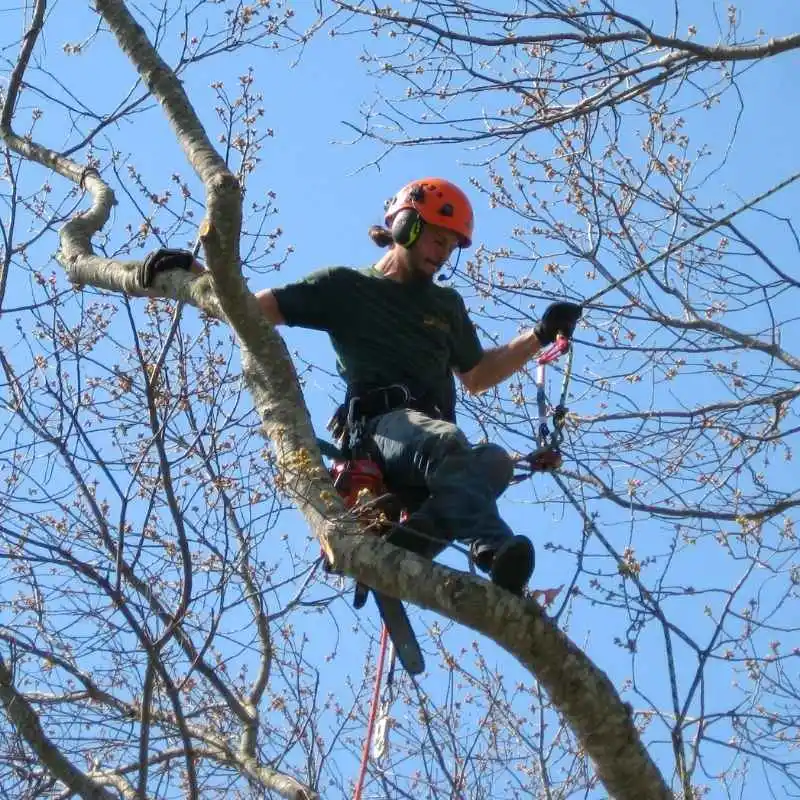
There is no single trimming schedule that works for every tree. How often a tree needs trimming depends on its age, species, condition, growth, location, and the reason for the work. Some trees need attention because of dead or damaged branches, growth toward roofs or power lines, storm damage, or structural concerns. Others may need only occasional maintenance.
Routine trimming is different from removing branches because a specific problem has developed. If you are unsure whether your tree needs attention, a tree trimming service can assess the tree’s growth, structure, surrounding property, and any branches that may need to be removed.
How Often Should Trees Be Trimmed?
There is no fixed trimming schedule for every tree. The right frequency depends on the tree’s age, species, condition, growth, location, and reason for trimming. Young trees may need periodic structural attention as they develop, while mature trees often need trimming only when there is a specific health, safety, clearance, or structural concern.
Young Trees Need Different Trimming Than Mature Trees
Young trees may need repeated structural pruning as they develop. Early attention can help establish better branch spacing and structure before problems become harder to correct. The work should focus on specific branches that need attention rather than removing large amounts of healthy growth.
Mature Trees Usually Need Trimming for a Specific Reason
Mature trees do not necessarily need trimming every year. Common reasons for pruning include dead or damaged branches, branches interfering with structures or utility lines, structural concerns, and storm damage. Regular inspection can identify problems, but the need for actual trimming depends on the tree’s condition.
Why There Is No Universal Trimming Schedule
Two trees can require different trimming schedules even when they are the same age. Species, growth pattern, health, location, and the purpose of the work all affect timing. Following a fixed calendar can lead to unnecessary pruning, so trimming should be based on what the individual tree actually needs.
What Factors Determine How Often a Tree Needs Trimming?
The right trimming frequency depends on the tree itself and what is happening around it. Age, species, growth, health, structure, and location can all change when trimming is needed.
Tree Age and Growth
Young trees may need more regular structural attention as they develop. Mature trees generally need trimming for a specific reason, such as damaged branches, clearance, or a structural concern. The amount of growth and how the tree is developing also affect when work is appropriate.
Tree Species and Growth Pattern
Different tree species grow in different ways, so their trimming needs are not identical. Some develop dense or fast-growing branches, while others have different natural growth patterns. The tree’s species should be considered when deciding how much growth to remove and when trimming is appropriate.
Tree Health and Structural Condition
A tree may need trimming outside its normal maintenance cycle when it has dead, broken, diseased, crossing, or structurally weak branches. Storm damage can also create an immediate need for attention. Trimming should address the branches that are creating a problem rather than removing healthy growth unnecessarily.
Location and Property Clearance
Where a tree grows can affect how often it needs attention. Branches extending toward roofs, buildings, walkways, driveways, or power lines may require trimming to maintain appropriate clearance. A tree in an open area may have fewer clearance concerns than one growing close to structures or utility lines.
How Often Should Trees Be Trimmed for Different Situations?
The right timing depends on why the tree needs attention. A young tree developing its structure has different needs from a mature shade tree, while trees growing close to homes or power lines may need trimming sooner because of clearance concerns.
Young or Recently Established Trees
Young trees may benefit from early structural pruning as they develop. Addressing poorly positioned or competing branches while the tree is still developing can help establish a stronger branch structure and reduce the need for more extensive corrective work later.
Mature Shade Trees
Mature trees do not need heavy trimming simply because several years have passed. Trimming should have a specific purpose, such as removing damaged branches, addressing structural concerns, or managing growth that has become a problem. The tree’s condition should determine when work is appropriate.
Trees Near Homes or Power Lines
Trees growing close to roofs, buildings, walkways, driveways, or power lines may need attention when branches begin to interfere with those areas. Clearance concerns can create a need for trimming sooner than the tree’s normal maintenance cycle.
Large or Overgrown Trees
A large tree does not automatically need to be trimmed on a set schedule. Its size, condition, structure, growth pattern, and location all matter. Overgrown trees should be assessed to determine which branches actually need removal and how much growth can be safely reduced. Penn State Extension recommends basing pruning on the tree’s specific needs rather than applying one schedule to every tree.
When Is the Best Time to Trim Trees?
For many deciduous trees, late fall through winter or early spring is a common pruning window, but the best timing depends on the tree species and reason for the work. Storm damage and other immediate problems may require trimming outside the normal seasonal window.
Why Dormant-Season Trimming Is Often Preferred
Dormant-season trimming is often preferred because the tree has less active growth and its branch structure is easier to see after the leaves have fallen. This makes it easier to evaluate the canopy and identify branches that need removal. For many deciduous trees, late fall after dormancy through very early spring is a common pruning window.
Are There Months When You Should Not Trim Trees
There is no single month when every tree should never be trimmed. However, late summer and early fall can be poor timing for many trees because trimming can encourage new growth while the tree is preparing for winter. Some species also have specific timing considerations. The tree species and reason for the work should guide when trimming is appropriate.
What About Storm Damage?
Storm damage can require trimming outside the normal seasonal window. Broken or damaged branches may create an immediate hazard and should not simply be left until the preferred pruning season. Storm-damaged trees also require careful assessment before work begins, particularly when large limbs or structural damage are involved.
What Are the Signs That a Tree Needs Trimming?
A tree may need trimming when dead, damaged, crossing, obstructing, or structurally problematic branches affect the tree or surrounding property. Common signs include:
- Dead or broken branches
- Branches rubbing or crossing
- Limbs growing toward a roof or structure
- Branches interfering with power or communication lines
- Dense growth that limits light or airflow
- Limbs creating clearance problems around walkways or other property areas
- Storm-damaged branches
- Growth that is affecting the tree’s natural structure
Not every visible branch problem means the entire tree needs trimming. The goal is to identify the branches that actually need to be removed and address the specific problem without removing more growth than necessary.
Branches growing over a roof, toward power lines, or across a walkway may need attention because they interfere with the property. Dead or damaged branches may also need removal because they affect the tree’s condition. Dense areas of the canopy can require selective trimming when they restrict light and airflow.
The amount of trimming matters as well. A trimming plan should focus on the specific reason for the work rather than treating every tree as if it needs the same amount of growth removed.
What Happens If You Don’t Trim a Tree When It Needs It?
Delaying needed trimming can leave dead, broken, crossing, or obstructing branches in the canopy. These branches can interfere with roofs, walkways, power lines, and other property features.
They can also affect the tree’s structure and appearance. Storm-damaged or broken branches may need attention sooner than routine maintenance would require.
However, not every mature tree needs regular trimming. Time alone is not a reason to remove healthy branches. Unnecessary pruning can also damage a tree.
Tree Trimming vs. Tree Pruning: What’s the Difference?
Tree trimming and tree pruning are often used interchangeably. The purpose of the work can still differ.
Trimming generally focuses on managing growth and removing branches that interfere with the property. This can include branches near roofs, power lines, walkways, or other areas that need clearance.
Pruning takes a more deliberate approach to branch selection. It can focus on the tree’s health, structure, shape, or development.
The terms are not always used consistently. What matters is why a branch needs to be removed and how much growth should be taken. The work should match the tree’s condition and the reason for trimming or pruning.
Frequently Asked Questions
There is no fixed schedule for every tree. Trimming frequency depends on the tree’s age, species, health, growth, location, and reason for the work. Some trees need regular structural attention, while others only need trimming when a specific problem develops.
Mature trees do not usually need trimming on a fixed annual schedule. Trimming may be needed for dead or damaged branches, clearance, structural concerns, storm damage, or other specific conditions.
No, not every tree needs annual trimming. A yearly inspection can help identify problems, but the need for actual trimming depends on the tree’s condition and surroundings.
There is no single set of months that applies to every tree. Late summer can be a poor time for some trees, and disease or insect concerns can also affect timing. The species and reason for trimming should guide the decision.
A tree may need trimming when it has dead or damaged branches, crossing limbs, clearance problems, storm damage, or structural concerns. Branches growing toward roofs, utility lines, or other property features may also need attention.
Sometimes. Late fall can be appropriate for some trees after they enter dormancy. Timing still depends on the species, local conditions, and reason for the work.
How Often Should Trees Be Trimmed in Lawrence, KS?
Homeowners in Lawrence should not rely on a generic trimming calendar. Local weather, tree species, growth, storm damage, and the tree’s location can all affect when trimming is appropriate.
Trees near homes, roofs, walkways, or utility lines may need attention when branches create clearance problems. Storm damage can also create a need for trimming outside the normal maintenance cycle.
Seasonal timing matters, but the tree’s actual condition should guide the decision. A needs-based assessment is more useful than trimming simply because a certain amount of time has passed.
Conclusion
There is no single trimming schedule that works for every tree. Young trees may need structural attention as they develop, while mature trees may only need trimming when a specific issue arises. Tree species, health, growth, location, and the reason for the work all affect timing.
When branches become damaged, obstructive, or structurally problematic, a tree trimming service in Lawrence can assess the tree and determine which branches, if any, need to be removed. Seasonal timing matters, but the tree’s condition should always guide the decision.
